

Ageing, Adaptation, and Independence: The Value of Occupational Therapy
Oct 04, 2026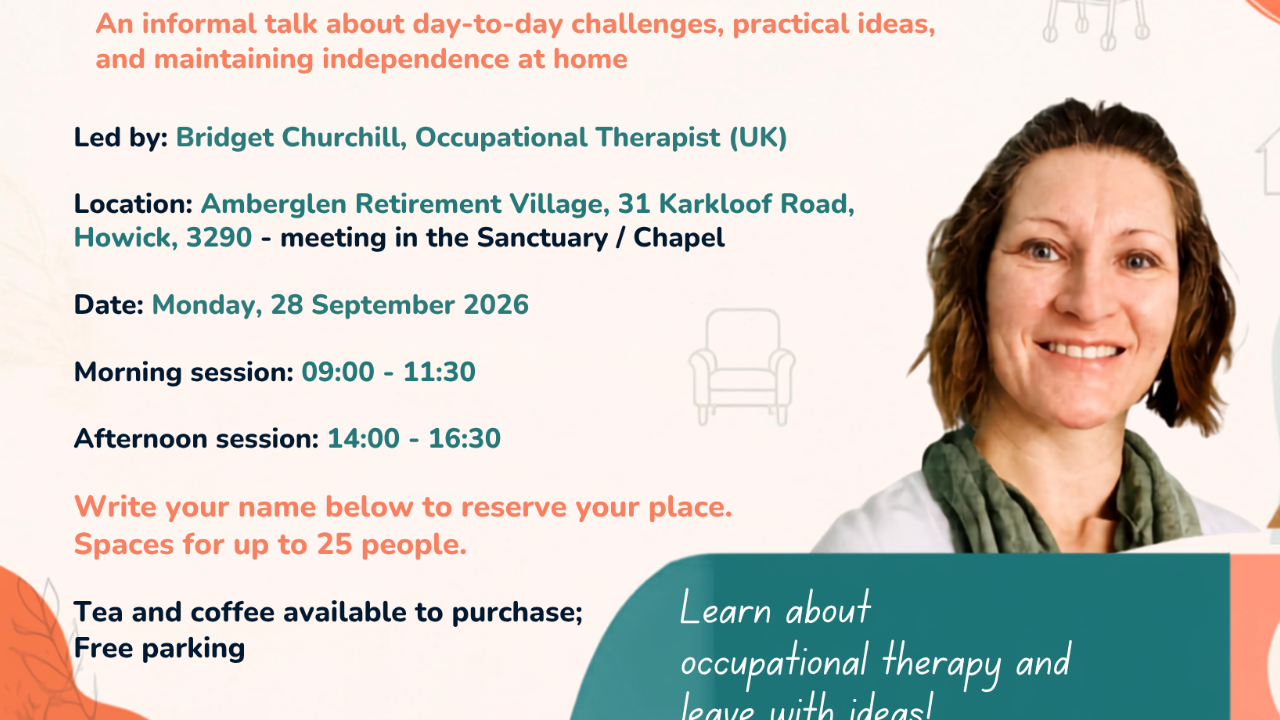
I recently had the pleasure of presenting two informative sessions about all things occupational therapy (OT) to residents of the Amberglen Retirement Village in Howick, South Africa.
Occupational therapy is, in my opinion, an underutilised resource. Many people are still unaware of the breadth and diversity of our profession's contribution to health, wellbeing, and living well. For older adults and those navigating the ageing process, this knowledge is particularly important.
When rehabilitation or a return to previous levels of function may not be possible due to chronic or progressive health conditions, it becomes increasingly important to consider what can be adapted within the activity itself, the tools and equipment used, or the environment in which it takes place. These adjustments can help maintain independence, participation, and engagement in meaningful activities. Rehabilitation is certainly not impossible in older adults, but it can sometimes be more complex and may require compensatory strategies and support along the journey.
I delivered two sessions, each lasting between 2.5 and 3 hours, with residents. When sessions run longer than planned, this is the evidence that what we are discussing is interesting and helpful! Some attendees were living with existing health conditions, while others simply had questions about ageing well and maintaining independence. We discussed topics including pain management, hand function, mobility, home adaptations, and practical strategies for everyday living.
I was also fortunate to have colleagues in attendance, providing an opportunity for them to learn more about occupational therapy services for their own clients and older family members.
A particular highlight for me was having a family member attend who is considering a career in occupational therapy. It was wonderful to see their enthusiasm and engagement throughout the session. I am incredibly grateful that I chose this profession and, throughout my career, I have never regretted that decision.
For those navigating their older years: don't stop doing what you love. If health challenges are making it more difficult to participate in the activities that bring meaning and purpose to your life, reach out to an occupational therapist.
For those who know little about occupational therapy: ask questions. We love talking about what we do!
My key learnings from these sessions were:
1. We can always learn from one another.
Every conversation offers an opportunity to gain a new perspective, understanding, or insight.
2. Occupational therapists bring a unique perspective.
We help individuals think holistically about what matters most in their lives and explore ways to continue engaging in meaningful occupations despite challenges or changes in health.
3. There is almost always another way.
When familiar methods of completing a task become difficult, alternative approaches can often be explored. This is a particular area of interest for me. Advances in technology, adaptive equipment, and everyday innovations mean that many tasks can become easier and more accessible. Think of electric can openers, elastic shoelaces, or spoons designed to reduce the impact of tremors during eating. Every day as an OT is a day of discovery, as we seek practical solutions that enable people to continue doing the things they need and want to do.
4. Don't give up.
A challenge does not automatically mean something is impossible. Instead, it presents an opportunity to think differently, adapt, and find new ways forward. Sometimes, "possible" simply looks different than it did before.
5. Everyone is unique.
What works well for one person may not work for another. This is the essence of person-centred care: understanding the individual and tailoring solutions to their unique circumstances, goals, and preferences.
6. Clinical education matters.
Sharing knowledge about what occupational therapists do, how we can help, and the difference we can make remains essential. Clinical education continues to be one of my greatest passions, and I genuinely love what I do.
Clinical education remains one of my greatest passions. If your retirement village, residential care facility, or community group would benefit from an occupational therapy education session, I would welcome the opportunity to connect. If you would be interested in a similar presentation please feel free to reach out.
